

SERV Reasoning Framework
Overview
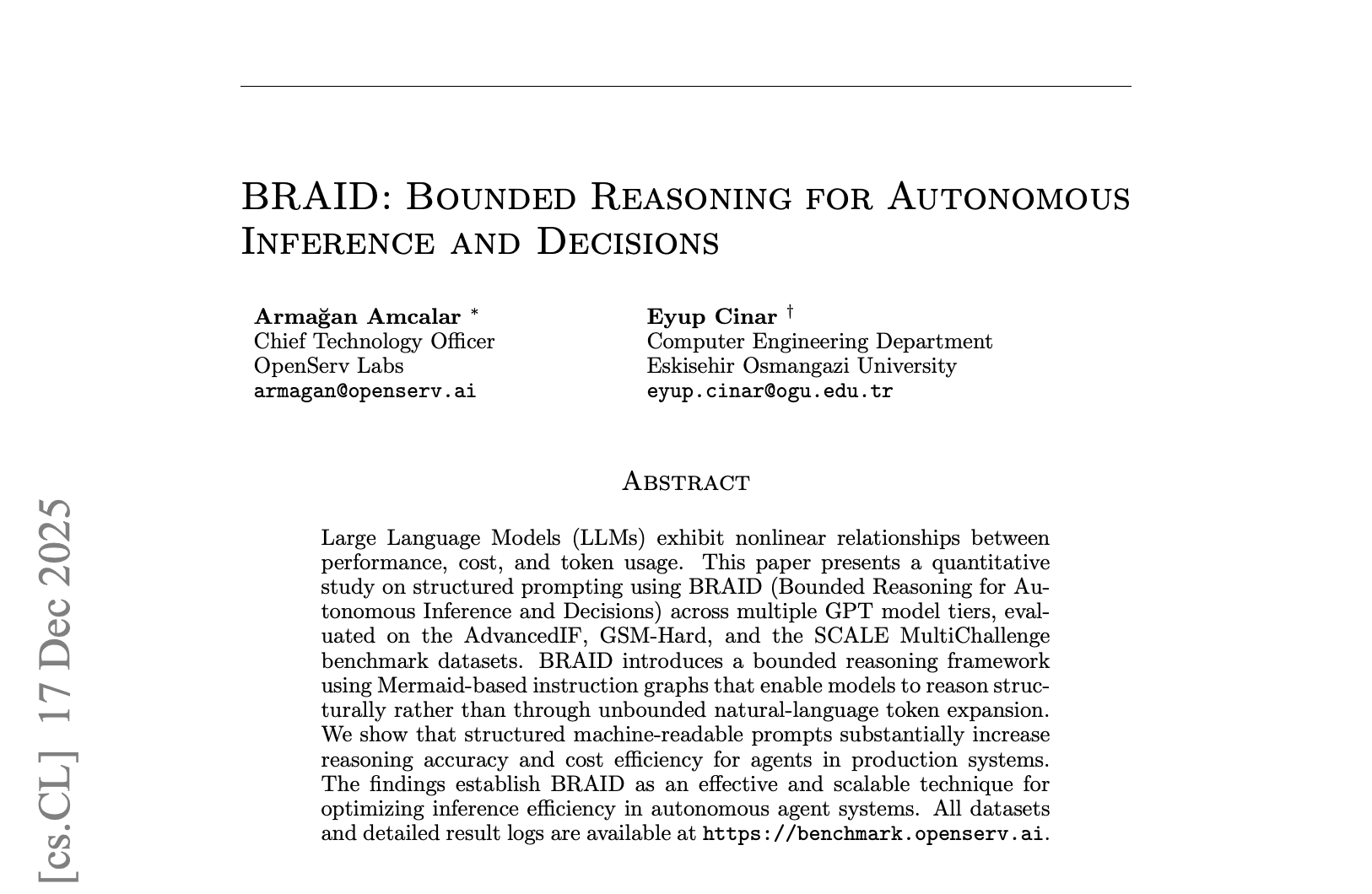
After years of wrestling with the shortcomings of AI and agentic implementations of AI, OpenServ's Chief Technology Officer Arman Amcalar worked with former NVIDIA researcher Dr. Eyup Cinar to develop the world’s best AI reasoning framework.
The result after months of research and development are that we can take any LLM and instantly make it smarter and more accurate for pennies on the dollar.
The propietary reasoning framework, known as BRAID (Bounded Reasoning for Autonomous Inference and Decisions) enables AI models to produce significantly more accurate results at a fraction of the normal cost.
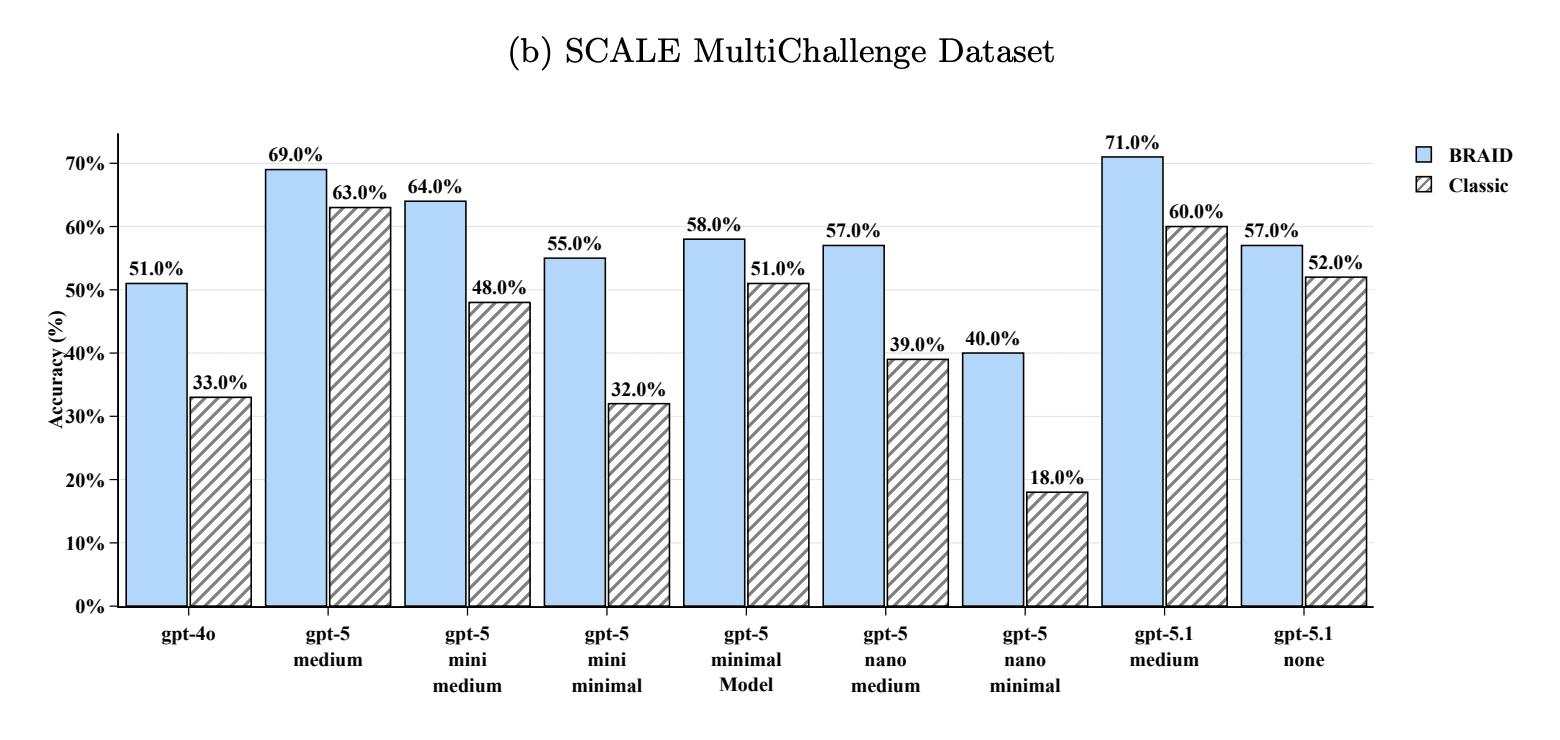
Measured against 3 highly regarded AI reasoning benchmarks, the results were clear.
On the GSM-Hard Benchmark for mathematical problems, BRAID unlocks near-perfect math with a 99% accuracy score at 74× lower cost using OpenAI's GPT-5.
On the SCALE Multichallenge Benchmark (complex multi-step reasoning), BRAID made GPT-4o 2.7x more accurate with 30.3x more performance-per-dollar.
On the AdvancedIF Benchmark (reasoning-centric assessment), gpt-5-nano 2.2x'd it's accuracy under structured reasoning with BRAID.
The Core Problem
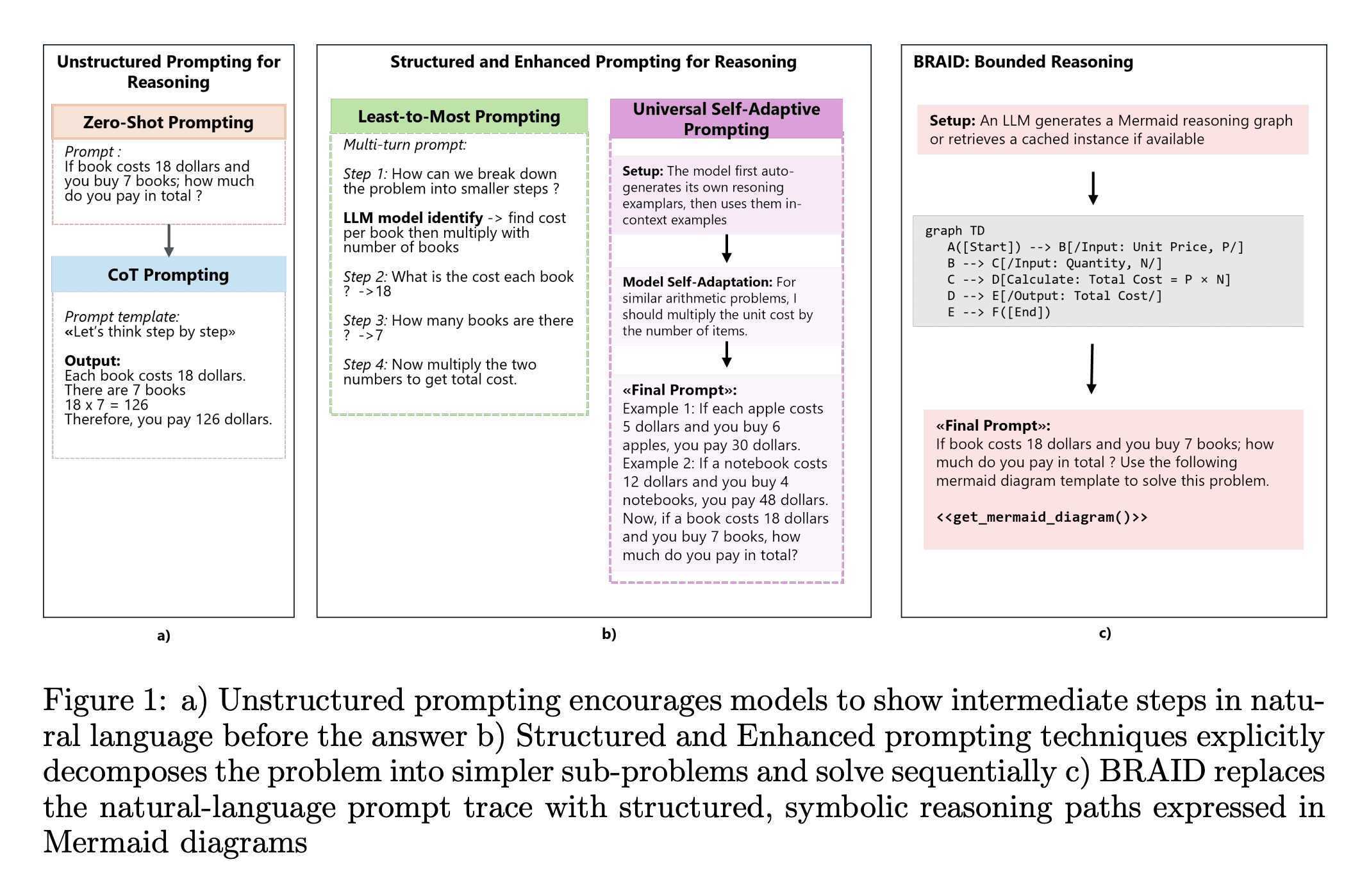
Natural-language prompts force language models to reason in English, which is a terrible format for precise thinking.
When a model “thinks out loud” in text:
- It mixes reasoning, narration, and guessing together
- It wastes tokens on filler words that add no logical value
- It can lose track of earlier steps or contradict itself
- The reasoning path is implicit and fragile, not enforceable
In short, English is great for communication, but bad for computation.
What it Fixes
BRAID replaces English “thinking” with explicit, machine-readable logic using JavaScript where:
- Decisions become clear branches
- Constraints become rules
- Reasoning becomes reusable, testable, and cheap
Instead of asking a model to figure out how to think every time, SERV gives it a decision tree to execute.
Using BRAID, a model understands prompts more clearly, knows exactly what it’s supposed to do, and responds with far higher accuracy while dramatically reducing hallucinations and mistakes.
The size of the problem this solves cannot be understated.
The Result?
OpenServ has built AI that actually works and behaves.
And that’s what actually wins.
This is the difference between “AI experiment” and AI business, and we've invented the technology to make that leap.
Every agent, startup, and enterprise client on the SERV stack instantly receives our proprietary reasoning engine out of the box.
- SERV-powered agents are cheaper to run
- They outperform competitors using off-the-shelf AI
- They scale without linear costs
- They don’t die from hallucinations
This is the moat that no one else has.
Web Coverage
-
arXiv paper (2512.15959) details full results; Hugging Face and AlphaXiv host discussions.
https://arxiv.org/abs/2512.15959 -
Messari report (Sep 2025): Frames it as reshaping agent economics, outperforming GPT on benchmarks.
https://messari.io/report/openserv-braid-ai-architecture-launch -
Benzinga: Praised for transparency; targets single-founder unicorns in crypto/AI.
https://www.benzinga.com/crypto/cryptocurrency/25/08/47387496/openservs-braid-framework-surpasses-gpt-models-targets-enterprise-use-with-auditable-ai-reasoning
Why Enterprises Are Trusting SERV Reasoning Framework Today
The payoff is delayed, then sudden.
At first:
- “it’s just better reasoning”
- “it’s academic”
- “who cares”
But over time:
- agents outperform competitors
- frustrations wash away
- margins don’t collapse
- infra costs stay low
- systems run flawlessly while others fail
SERV Reasoning Framework allows any organization — of any size — to have confidence that they are running the very best state-of-the-art models at their tightest efficiency level at the lowest possible cost. A no brainer.
To learn more, read the Research Paper on arXiv:
🔗 BRAID: Bounded Reasoning for Autonomous Inference and Decisions
See the raw benchmark results:
The paper is currently under peer-review by the Artificial Intelligence Review publication for state-of-the-art research in artificial intelligence and cognitive science (https://link.springer.com/journal/10462).