> ## Documentation Index
> Fetch the complete documentation index at: https://docs.openserv.ai/llms.txt
> Use this file to discover all available pages before exploring further.
# Control prompt caching
> Reuse generated reasoning prompts or request a fresh one.
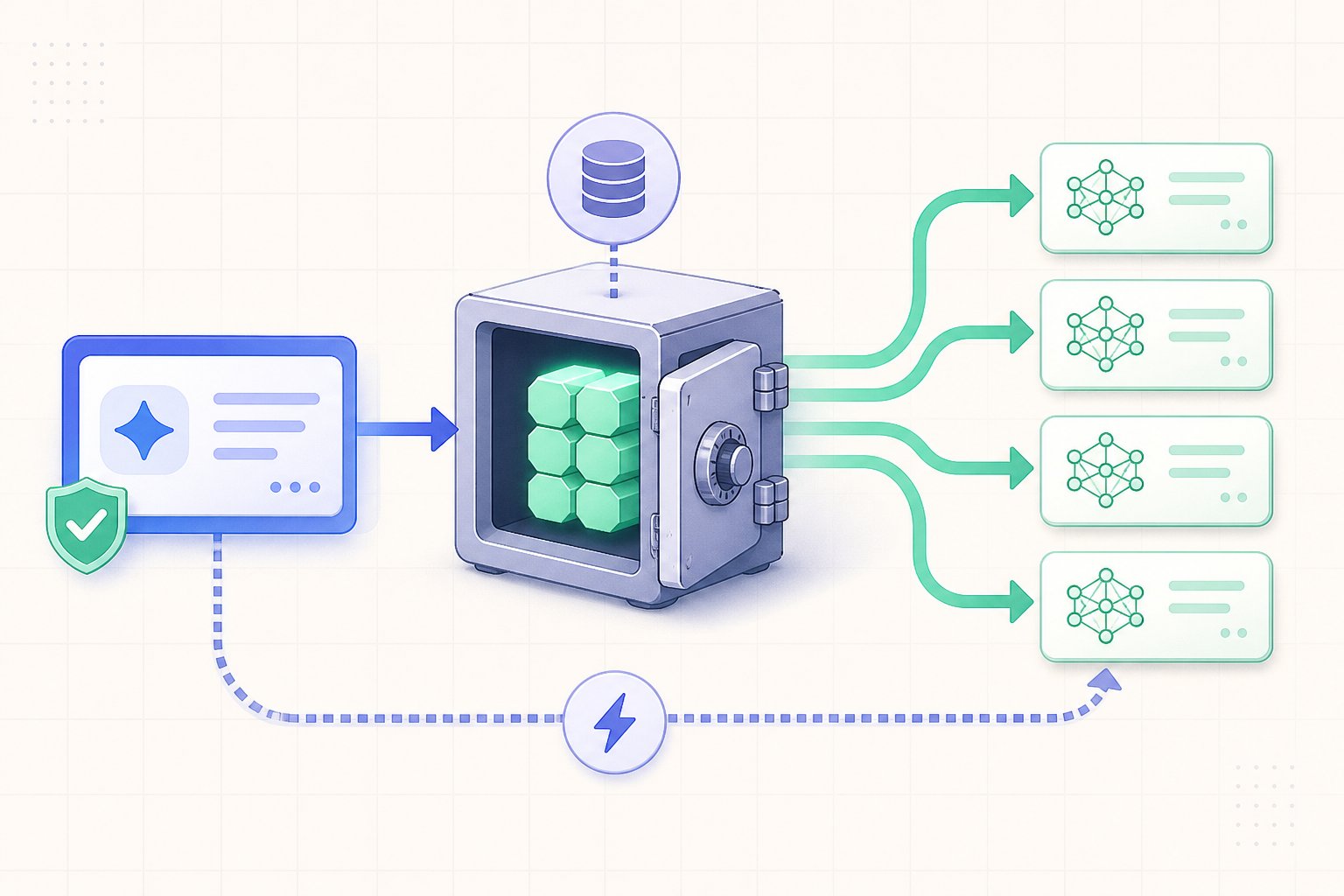 SERV caches generated reasoning prompts per organization. The cache is enabled by default.
## How caching works
On the first request with a system prompt, SERV generates a reasoning prompt and stores it. A later request with the same organization, prompt, and relevant reasoning configuration can reuse that generated prompt. The customer request still goes to the upstream model each time; caching applies to the SERV reasoning-generation step.
Cache entries are organization-scoped and expire automatically. A cache hit can reduce latency and generation cost. It does not cache the model’s answer.
Disable it for a request with `metadata.prompt_cache`:
```js theme={null}
const response = await client.chat.completions.create({
model: "gpt-5.4-mini",
metadata: { prompt_cache: "disabled" },
messages: [
{ role: "system", content: "Analyze the latest version of this policy." },
{ role: "user", content: "Review these policy changes: ..." },
],
});
```
Keep system prompts stable when possible. Put changing data in user messages or tool results so generated reasoning can be reused safely.
Use `metadata.prompt_cache: "disabled"` when the system prompt represents a newly changed policy, when you are testing a fresh prompt version, or when you need to avoid reusing a previous reasoning transformation. Do not put secrets in a system prompt merely because caching is enabled; follow your organization’s data-handling policy.
SERV caches generated reasoning prompts per organization. The cache is enabled by default.
## How caching works
On the first request with a system prompt, SERV generates a reasoning prompt and stores it. A later request with the same organization, prompt, and relevant reasoning configuration can reuse that generated prompt. The customer request still goes to the upstream model each time; caching applies to the SERV reasoning-generation step.
Cache entries are organization-scoped and expire automatically. A cache hit can reduce latency and generation cost. It does not cache the model’s answer.
Disable it for a request with `metadata.prompt_cache`:
```js theme={null}
const response = await client.chat.completions.create({
model: "gpt-5.4-mini",
metadata: { prompt_cache: "disabled" },
messages: [
{ role: "system", content: "Analyze the latest version of this policy." },
{ role: "user", content: "Review these policy changes: ..." },
],
});
```
Keep system prompts stable when possible. Put changing data in user messages or tool results so generated reasoning can be reused safely.
Use `metadata.prompt_cache: "disabled"` when the system prompt represents a newly changed policy, when you are testing a fresh prompt version, or when you need to avoid reusing a previous reasoning transformation. Do not put secrets in a system prompt merely because caching is enabled; follow your organization’s data-handling policy.